sábado, enero 17, 2015


domingo, julio 21, 2013
Carl Sagan quotes. My favourite
“Every one of us is, in the cosmic perspective, precious. If a human disagrees with you, let him live. In a hundred billion galaxies, you will not find another."
"From a distant vantage point, the Earth might not seem of particular interest. But for us, it's different. Consider again that dot. That's here, that's home, that's us. On it everyone you love, everyone you know, everyone you ever heard of, every human being who ever was, lived out their lives. The aggregate of our joy and suffering, thousands of confident religions, ideologies, and economic doctrines, every hunter and forager, every hero and coward, every creator and destroyer of civilization, every king and peasant, every young couple in love, every mother and father, hopeful child, inventor and explorer, every teacher of morals, every corrupt politician, every "superstar", every "supreme leader", every saint and sinner in the history of our species lived there - on a mote of dust suspended in a sunbeam."
jueves, febrero 21, 2013
2012 DA14 flyby from the "Observatorio del Teide"
This is the best video of the amazing closely flyby over our heads of the 2012 DA14 asteroid:
Also available at http://vimeo.com/elcielodecanarias/asteroide2012da14
More about the 2012 DA14 asteroid: http://en.wikipedia.org/wiki/2012_DA14
Also available at http://vimeo.com/elcielodecanarias/asteroide2012da14
More about the 2012 DA14 asteroid: http://en.wikipedia.org/wiki/2012_DA14
viernes, enero 04, 2013
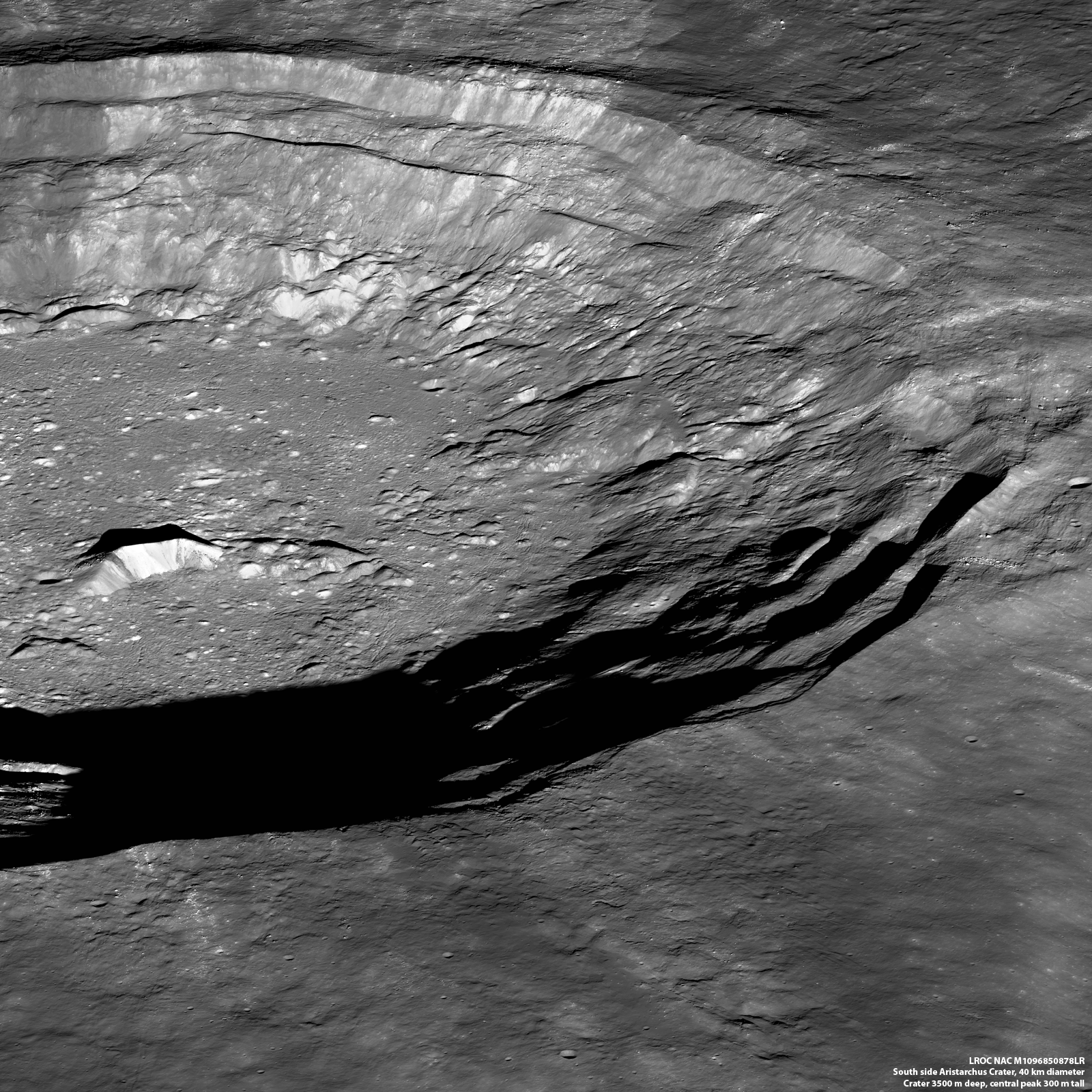
Amazing, wonderful images of Tycho and Aristarchus lunar craters
Tycho:
Credits:NASA /GSFC /Arizona State Univ. /LunarReconnaissance Orbiter
Source page: http://observatorio.info/2013/01/amanecer-en-tycho/
Aristarchus:
martes, febrero 21, 2012
Eyepieces feedback
My feedback for the following eyepieces (used in SCT Meade LX90 8" and Dobson GSO 16"):
* University Konïg MK-70 25mm 70º
* Vixen LV 30mm 60º
* Astro-Tech Titan Type II ED 40mm 68º
* Televue Radian 14mm 60º
* University Konïg MK-70 25mm 70º:
Great for both planetary and deep space. On a Dobson, Jupiter shows amazing. The cloud bands are perfectly visible and the definition of that bands are impressive.
High contrast in the SCT, no chromatic aberration in any of both telescopes.
Very punctual stars, even in the SCT.
* Vixen LV 30mm 60º:
Good option for deep space, even for a 60º aFOV.
Not a good performance in the Dobson, but quiet good in the SCT.
Very punctual stars, but, maybe not enough contrast for deep space.
* Astro-Tech Titan Type II ED 40mm 68º:
A not very known brand in Spain, it was the "star product" of our last astronomical party... Nobody knew it, but everyone enjoyed the spectacular and sharpness images of this eyepiece.
In the Dobson, amazing. In the SCT, also incredible images.. high contrast and very punctual stars.
* Televue Radian 14mm 60º
Very very good eyepiece, especially, for planetary. Jupiter, in both telescopes, amazing.
High contrast even for deep space. M27, M57, M31, M33, M104, ....amazing, beautiful!!!!
* University Konïg MK-70 25mm 70º
* Vixen LV 30mm 60º
* Astro-Tech Titan Type II ED 40mm 68º
* Televue Radian 14mm 60º
* University Konïg MK-70 25mm 70º:
Great for both planetary and deep space. On a Dobson, Jupiter shows amazing. The cloud bands are perfectly visible and the definition of that bands are impressive.
High contrast in the SCT, no chromatic aberration in any of both telescopes.
Very punctual stars, even in the SCT.
* Vixen LV 30mm 60º:
Good option for deep space, even for a 60º aFOV.
Not a good performance in the Dobson, but quiet good in the SCT.
Very punctual stars, but, maybe not enough contrast for deep space.
* Astro-Tech Titan Type II ED 40mm 68º:
A not very known brand in Spain, it was the "star product" of our last astronomical party... Nobody knew it, but everyone enjoyed the spectacular and sharpness images of this eyepiece.
In the Dobson, amazing. In the SCT, also incredible images.. high contrast and very punctual stars.
* Televue Radian 14mm 60º
Very very good eyepiece, especially, for planetary. Jupiter, in both telescopes, amazing.
High contrast even for deep space. M27, M57, M31, M33, M104, ....amazing, beautiful!!!!
New (for me) eyepiece.... Vixen LV 5mm Lanthanum

Test still pending..... it seems to be a good eyepiece for planetary
Type: Plossl
Focal: 5mm
Barrel size: 1,25"
AFOV: 45º
Eye relief: 20mm
Elements: 7
06/19/2015 Update:
Good performance in my LX 90 8" for planetary, good sharpness and definition and high-contrasted images.
Great value for the price!!
sábado, noviembre 12, 2011
My new Helios Quantum 6 20/26/32x88 giant binoculars first light

First light was for Jupiter :D
Today, Jupiter (atitude 29.34º, 19:52 the only moment a break in the clouds gave a chance...), beautiful, amazing.... cloud bands were clear there (even at 20x); the four Galilean moons, dancing around the gas giant in a perfect line.
This kind of equipment is very fast to prepare and use... see it, take it, use it... and enjoy it!
I´m using an Utralyt 6097 tripod. My first feedback is good. It is solid and supports very well the 4.5kg of the binoculars.... easy to mount and use, soft movements,... and cheaper than other ones with similar features :)
domingo, septiembre 11, 2011
Some old astrophotos reprocessed
These pictures were taken in Torrecilla two years ago.
M20 and M8 in Sagitarius:

Sagitarius region:


martes, agosto 30, 2011
Four eyepieces for the collection
I have recently bought four new eyepieces:

I tested it last night. I think thast it is the most versatile of all my eyepieces.

This is a 40mm 2" Wide Field with 68º AFOV. It's clear that it could not be as a 100º AFOV, but I guess it is enough for a 40mm.
Vixen LV 30mm 60º:

As well as the Astro-tech, a 60º AFOV for an 30mm should be enough, at least for my (almost) 37 years old eyes :)

University Optics Konïg MK-70 25mm, 70º:
http://www.cloudynights.com/documents/konig.pdf
http://www.excelsis.com/1.0/entry/university-optics-konig-mk-70-25mm-22-117.html?PHPSESSID=6ae5e99b51500f071a13ab29cf48f83a
http://www.excelsis.com/1.0/entry/university-optics-konig-mk-70-25mm-22-117.html?PHPSESSID=6ae5e99b51500f071a13ab29cf48f83a
Vixen LV 30mm 60º
Astro-Tech Titan Type II ED 40mm 68º:
Televue Radian 14mm 60º:
http://www.televue.com/engine/TV3_page.asp?id=50&Tab=EP_ERD-14.0
http://www.televue.com/engine/TV3_page.asp?id=50&Tab=EP_ERD-14.0
University Optics Konïg MK-70 25mm, 70º:
Stats:
Stats:
Type: Misc Wide Angle / Multi Coated
Focal: 25mm
Barrel size: 2"
aFOV: 70º
Field Stop: 29mm
Eye Lens: 24.5mm
Eye relief: 20mm
Elements: 7
ExitPupilsf5=5,f7=3.6mm,f10=2.5
I tested it last night. I think thast it is the most versatile of all my eyepieces.
Astro-Tech Titan Type II ED 40mm 68º:

Stats:
Type:
Focal: 40mm
Barrel size: 2"
aFOV: 68º
Field Stop: 29mm
Eye Lens: 32mm
Eye relief: 14mm
Elements: 6
This is a 40mm 2" Wide Field with 68º AFOV. It's clear that it could not be as a 100º AFOV, but I guess it is enough for a 40mm.
Vixen LV 30mm 60º:

Stats:
Type:
Focal: 30mm
Barrel size: 2"
aFOV: 60º
Field Stop: 31,4mm
Eye Lens: ?
Eye relief: 20mm
Elements: 7
As well as the Astro-tech, a 60º AFOV for an 30mm should be enough, at least for my (almost) 37 years old eyes :)
Televue Radian 14mm 60º:
Stats:
Type: Radian
Focal: 14mm
Barrel size: 1,25"
aFOV: 60º
Field Stop: 14,4mm
Eye Lens: ?
Eye relief: 20mm
Elements: 6
To be tested......
Keep in mind that all of them will be used (for the moment) with a LX90 8", with a focal length of 2003mm and f/10.
sábado, julio 09, 2011
Atlantis Space Shuttle last mission
 With this mission, the Space Shuttles say goodbye after 30 years and more than 130 space missions
The next Space Missions will use the Russia's Soyuz space capsules
Let's try my new Meade DSI II Pro Color CCD camera
My last acquisition is the DSI II Pro Color camera from MEADE. It seems to be a very good option for both guiding and capturing from other expensiver ones.
On a first view, there are three main differences between this model and the Atik 16IC-s.
First one, the MEADE is not cooled (a problem for guiding...? I don't think so).
Second, it doesn't have an ST4 (not a problem for me, right now, since I have a LX90).
Third, the CCD sensor of the MEADE is better than the Atik (Sony ICX429AKL vs Sony ICS415AL)
lunes, enero 31, 2011
martes, agosto 10, 2010
sábado, julio 24, 2010
The Hirsh f/6.3 focal reducer test
After having testing the Hirsch focal reducer for months, I think that it's a very good option from the MEADE and Celestron ones:
I could compare it with the Meade original, and I didn't find differences between both of them in terms of optical quality and luminosity.
It is a 4 element design, as the Meade 4000 series. By using it, reduces the main telescope's focal ratio by a factor of 0.63 (e.g. from f/10 to f/6.3), so a 2000mm of focal length would be a 1260mm... yes, reducing the main focal, but dramatically increasing the luminosity of the telescope.
A low price and high optical quality recommends it as a very good purchase option regarding most expensive ones from the well-known brands...
I could compare it with the Meade original, and I didn't find differences between both of them in terms of optical quality and luminosity.
It is a 4 element design, as the Meade 4000 series. By using it, reduces the main telescope's focal ratio by a factor of 0.63 (e.g. from f/10 to f/6.3), so a 2000mm of focal length would be a 1260mm... yes, reducing the main focal, but dramatically increasing the luminosity of the telescope.
A low price and high optical quality recommends it as a very good purchase option regarding most expensive ones from the well-known brands...
lunes, septiembre 01, 2008
Three new elements to test....
Three new elements have been recently included in my kit for the LX90:
- Hirsch focal reducer f/6.3 (from f/10).
- Barlow Meade Series 4000 2x APO #140
- Guiding tube from "Lunático", focal 230 60mm f/3.8
I hope to be able to prove all three the next weekend, or at least both the focal reducer and the barlow lens.
I will publish my opinions shortly....
- Hirsch focal reducer f/6.3 (from f/10).
- Barlow Meade Series 4000 2x APO #140
- Guiding tube from "Lunático", focal 230 60mm f/3.8
I hope to be able to prove all three the next weekend, or at least both the focal reducer and the barlow lens.
I will publish my opinions shortly....
viernes, agosto 22, 2008

domingo, agosto 03, 2008
Pictures taken at La Hiruela
What can you see in this photo?: NGC7000 (North America Nebula)

What can you see in this photo?: M8 (Swan Nebula) & M20 (Trifid Nebula) in Sagittarious constellation.

What can you see in this photo?: The Milky Way and Jupiter.

domingo, marzo 23, 2008
17P-Holmes comet from El Álamo

Image taken on March 2, 2007, from El Álamo.
Canon EOS 300D, 50mm, tripod, 30sec exposure.
sábado, septiembre 29, 2007
Dawn probe flying to the asteriods belt.......

2007.09.27: this dawn, the "Dawn" probe has started the fly to the asteroid belt, between Mars and Jupiter, where will arrive in four years, . In fact, this belt "differentiates" the inner from the outer Solar System.
"Dawn" will explore the asteroids called "Vesta" and "Ceres", the two of the bigger bodies located there.
jueves, agosto 16, 2007
Astromical observation from "Orusco de Tajuña".
oThe last Saturday to Sunday night, Gonzalo, Vicente and me (in the first picture, from right to left) were in "Orusco de Tajuña", a little town near Madrid, about 90km away from there. The night sky was wonderful, keeping in mind the distance from Madrid, so I can say that the night was very useful and funny.
The following pictures are the best ones, in raw mode yet, of that night. These photos show sky objects like M13, M31, M57, the Milky Way and Jupiter.
As I could work over this images in order to improve it, I will publish them in this entry.
Assistants:

The Milky Way in Sagittarious constellation:
Camera: Canon EOS 300D.
Lens: Nikkor 50mm f1:1.8 at f1.8.
Exposure time: 20".
ISO: 1600.
What can you see in this photo?: The Milky Way in Sagittarious.

M13:
Camera: Canon EOS 300D.
Telescope: MEADE LX90 8" SC GPS UHTC.
Exposure time: 20".
ISO: 3200.
What can you see in this picture?: The Great Globular Cluster in Hercules.

M31:
Camera: Canon EOS 300D.
Telescope: MEADE LX90 8" SC GPS UHTC.
Exposure time: 68".
ISO: 3200.
What can you see in this picture?: The well-known Andromeda Galaxy, and his partner, the dwarf galaxy M32.
M57:
Camera: Canon EOS 300D.
Telescope: MEADE LX90 8" SC GPS UHTC.
Exposure time: 77".
ISO: 3200.
What can you see in this picture?: The Ring Nebula, a planetary nebula.
Jupiter:
Camera: Philips SPC 900NC.
Telescope: MEADE LX90 8" SC GPS UHTC.Total frames: 661.
Used frames: 100.
What can you see in this picture?: The planet Jupiter.

If you want to waste your time reading the full thread posted in the "astroseti" web site, you could follow this link in order to read all the post: http://foros.astroseti.org/viewtopic.php?t=3260. As you can read, it has been very hard to reach this event......
The following pictures are the best ones, in raw mode yet, of that night. These photos show sky objects like M13, M31, M57, the Milky Way and Jupiter.
As I could work over this images in order to improve it, I will publish them in this entry.
Assistants:


The Milky Way in Sagittarious constellation:
Camera: Canon EOS 300D.
Lens: Nikkor 50mm f1:1.8 at f1.8.
Exposure time: 20".
ISO: 1600.
What can you see in this photo?: The Milky Way in Sagittarious.

M13:
Camera: Canon EOS 300D.
Telescope: MEADE LX90 8" SC GPS UHTC.
Exposure time: 20".
ISO: 3200.
What can you see in this picture?: The Great Globular Cluster in Hercules.

M31:
Camera: Canon EOS 300D.
Telescope: MEADE LX90 8" SC GPS UHTC.
Exposure time: 68".
ISO: 3200.
What can you see in this picture?: The well-known Andromeda Galaxy, and his partner, the dwarf galaxy M32.

M57:
Camera: Canon EOS 300D.
Telescope: MEADE LX90 8" SC GPS UHTC.
Exposure time: 77".
ISO: 3200.
What can you see in this picture?: The Ring Nebula, a planetary nebula.

Jupiter:
Camera: Philips SPC 900NC.
Telescope: MEADE LX90 8" SC GPS UHTC.Total frames: 661.
Used frames: 100.
What can you see in this picture?: The planet Jupiter.

If you want to waste your time reading the full thread posted in the "astroseti" web site, you could follow this link in order to read all the post: http://foros.astroseti.org/viewtopic.php?t=3260. As you can read, it has been very hard to reach this event......
viernes, abril 27, 2007
A new Earthlike planet has been discovered
 The planet is estimated to be about 5.5 times as massive as Earth and thought to be rocky. It orbits a red dwarf star about 28,000 light-years away. Red dwarfs are about one-fifth as massive as the sun and up to 50 times fainter. But they are among the most common stars in the universe.
- Artist´s conception of the new Earthlike planet -
domingo, abril 15, 2007
The Mantiel´s public observatory

This is the public astronomical observatory of Mantiel.
To visit it, please visit the following link and follow the instructions:
http://www.aytomantiel.es/observatorio.php
Mantiel is a beautiful little town located at Guadalajara, about 110 km from Madrid. It is easy to arrive there from A-2 motorway.
martes, abril 03, 2007
Third image, improved with "Net Image" for noise reduction
Once more:


Improved with "Net Image" for noise reduction.
All values by default.
miércoles, marzo 07, 2007

domingo, marzo 04, 2007
New image of Saturn
 This is the first image obtained from the source video..... I want to work more with this one.
80 stacked images from a video of 889 images, captured yesterday, at 23:30 during the total moon eclipse.
Meade LX90 8" GPS UHTC + Philiphs SPC 900NC + barlow x2
martes, febrero 27, 2007

domingo, febrero 25, 2007
Rosetta swingby of Mars, confirmed!

The mission controllers at ESOC, ESA's Space Operations Centre in Germany, have confirmed today at 03:57 CET, that Rosetta´s swingby of Mars was made successfully, just only 250 km above of the planet surface.
Now, the next waypoint for the probe is the planet Earth, when the gravitational energy of our planet will "catapult" it to gain acceleration for its trek.
In year 2014, this probe will reach its target: the comet "Churyumov-Gerasimenko".
sábado, enero 27, 2007

New Horizons probe, next to Jupiter
 Launched one year ago to Pluto, destination that will be reached in july, 2015, the probe is next to Jupiter. It began to take some pictures of this gaseous giant, which will overfly the next 18 of february.
Pictures of Jupiter:http://pluto.jhuapl.edu/soc/index.php?page=1
Mission´s main page:http://pluto.jhuapl.edu/
Mission´s press report:http://pluto.jhuapl.edu/common/content/pdfs/011607_JupiterPressKit.pdf
COROT telescope sees first light

In the night between the past days 17 and 18 of january, the protective cover of the COROT telescope has been successfully opened, and COROT has seen for the first time light coming from stars.
Therefore, it could star their adventure searching for new extra-solar planets and learning about the stars interiors..... The scientific observatios will begin, officially, the next february.
Therefore, it could star their adventure searching for new extra-solar planets and learning about the stars interiors..... The scientific observatios will begin, officially, the next february.
- COROT first light -
domingo, enero 21, 2007
M42 from El Álamo
 Telescope: Meade Lx90 8" GPS UHTC
Camera: Canon EOS 300D with firmware upgrade
Exposure time: 62 sec.
ISO: 3200 (!)
Location: 40º24'N / -3°980 W El Álamo (Madrid)
Seeing: not bad
sábado, enero 13, 2007
First try of Saturn using the Philiphs SPC 900NC

This image is the result from 1300 stacked images, processed with Registax and Photoshop CS. The seeing was not good and the images were taken just when Saturn was appearing, but the final image is not too bad since this is my first image of Saturn using this webcam.....
miércoles, diciembre 27, 2006
CNES launchs "COROT" satellite for exoplanets search

CNES, with the collaboration of ESA, launchs the "COROT" satellite today.
This satellite has two goals: to detect new exoplanets orbiting around other stars and investigate the mysteries of stellar interiors as never before.
For additional information, please, visit http://www.esa.int/esaCP/SEM4IKQJNVE_index_0.html
domingo, noviembre 12, 2006
NASA lost contact with "Mars Global Surveyor" probe.

NASA´s engineers have lost contact with "Mars Global Surveyor" spacecraft, sent to Mars exploration ten years ago. This news were confirmed by the JPL.
martes, octubre 31, 2006
Prolongada la vida del Hubble tras confirmar la NASA una nueva misión de servicio
La NASA ha confirmado una nueva misión para la colocación de algunos nuevos componentes, baterías y otros servicios cruciales para la continuidad del telescopio hasta el año 2013.
- Pulsa sobre el título para acceder a la noticia completa
- Pulsa sobre el título para acceder a la noticia completa
jueves, septiembre 07, 2006
miércoles, septiembre 06, 2006
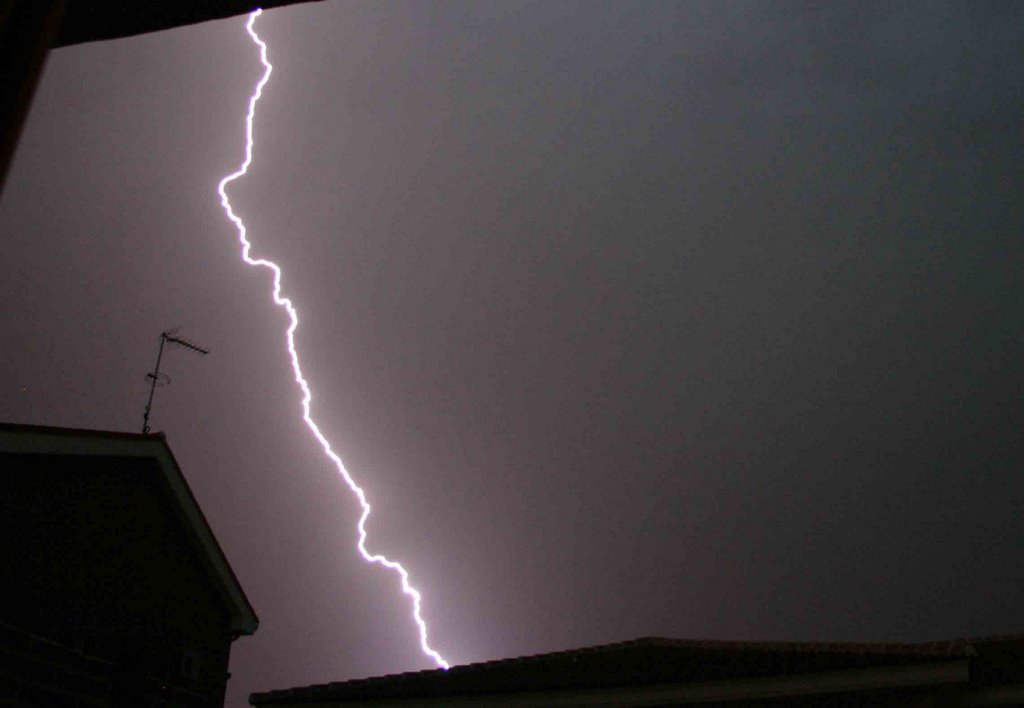
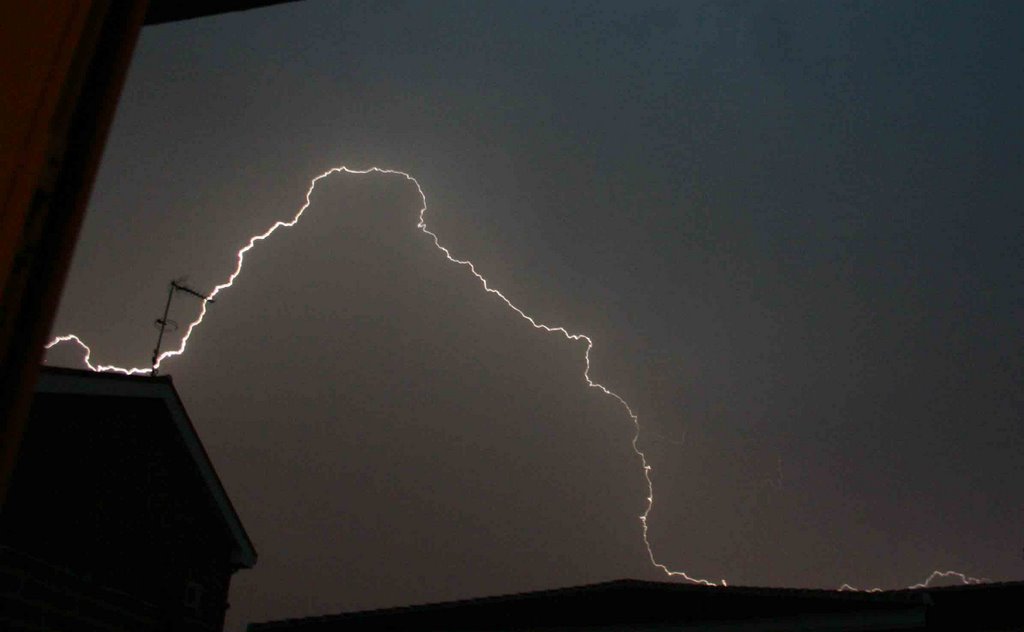
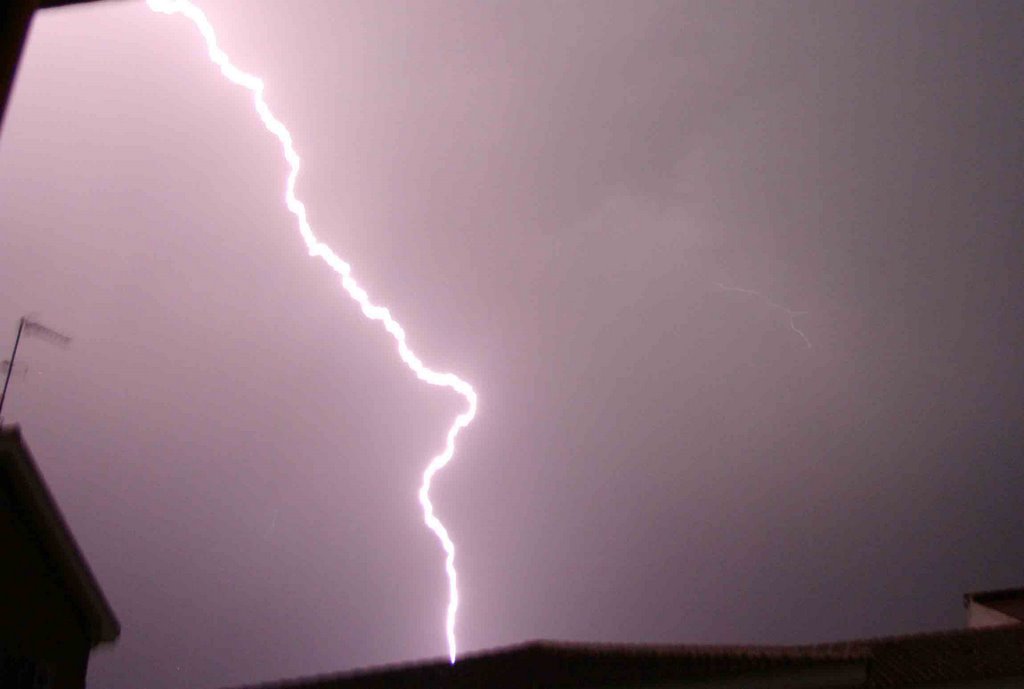
Menuda tormenta está cayendo.....
Estas son algunas muestras de la tormenta que está cayendo ahora mismo en la localidad en la que resido:


jueves, agosto 31, 2006
Astrónomos británicos observan una supernova en Aries en "tiempo real"

Para ello utilizaron el telescopio Swift de la NASA.
miércoles, agosto 30, 2006


jueves, agosto 24, 2006
Europa llega a la Luna con el SMART-1
El próximo 3 de septiembre la sonda SMART-1 impactará con la Luna, con lo que culminará su misión, comenzada el mes de septiembre de 2003.
Plutón deja de ser un planeta, y ahora es un "planeta enano". El Sistema Solar pasa ahora a tener 8 planetas

Tras tensas y largas deliberaciones, la UAI ha decidido excluir a Plutón de la lista de planetas del Sistema Solar, en vez de ampliar este a 9 o 12 miembros.
Por lo tanto, el Sistema Solar pasa a tener 8 planetas, en vez de 9.


martes, agosto 22, 2006
Astrónomos norteamericanos encuentran "pruebas" de la existencia de la materia oscura
Según los investigadores, el efecto gravitacional de la materia oscura se creó a partir de una separación violenta de este elemento y de materia común tras una gigantesca colisión entre dos grupos de galaxias.
martes, agosto 08, 2006
Llegan las Perseidas
Un año más, llegan las Perseidas.
Esta lluvia de estrellas tendrá su máximo la madrugada del 12 al 13 de agosto, aunque este año la presencia de la Luna limitará la observación a los meteoros más grandes.
Si quieres leer un excelente post al respecto, sigue este link:
http://www.sondasespaciales.com/modules.php?name=Forums&file=viewtopic&t=3695
Esta lluvia de estrellas tendrá su máximo la madrugada del 12 al 13 de agosto, aunque este año la presencia de la Luna limitará la observación a los meteoros más grandes.
Si quieres leer un excelente post al respecto, sigue este link:
http://www.sondasespaciales.com/modules.php?name=Forums&file=viewtopic&t=3695
domingo, agosto 06, 2006
lunes, julio 24, 2006
M20. Otra prueba con el LX90
No le doy importancia a la "calidad" de la foto, si no a lo que ofrece este telescopio con exposiciones de 30 seg.
Tengo que afinar el colimado, y hacer el training de los drives. Entonces, con exposiciones largas, veremos que es lo que se obtiene...... creo que promete de verdad.

Tengo que afinar el colimado, y hacer el training de los drives. Entonces, con exposiciones largas, veremos que es lo que se obtiene...... creo que promete de verdad.

Suscribirse a:
Entradas (Atom)